


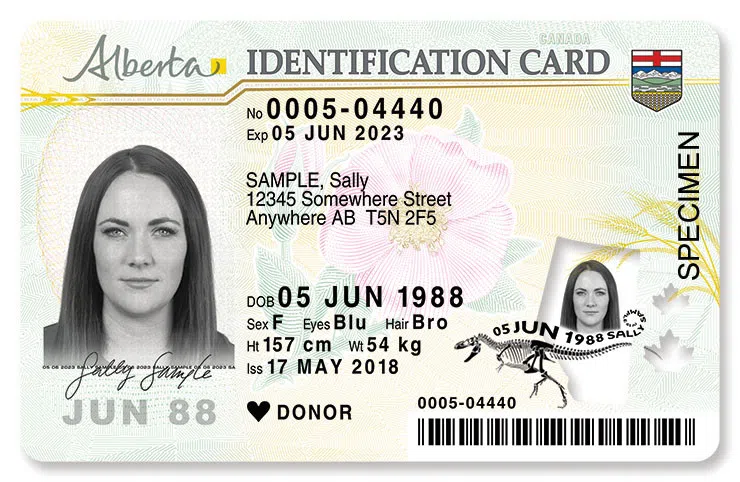
Alberta Drivers License Sample, GOA Image
Critics warn of privacy risks and discrimination, while government cites election integrity
EDMONTON — Alberta plans to become the first province to display Canadian citizenship status on driver’s licenses and provincial ID cards, a move the province says will strengthen trust in government services and safeguard the integrity of election results.
The change, set to take effect in 2026 for all new and renewed cards, will be introduced through legislation this fall. The government argues the new requirement will provide clarity and reinforce confidence in public programs and democratic processes.
Reaction has been swift and divided. On social media, many questioned why a province that has openly discussed holding a referendum on separation from Canada would emphasize Canadian citizenship on provincial ID. Others expressed concern that the measure could fuel discrimination against residents who are not Canadian citizens.
Former deputy premier Thomas Lukaszuk called the decision “Alberta’s version of Apartheid,” arguing there is no practical justification for the policy. “All provincial programs are equally available to citizens and permanent residents. There isn’t one practical reason for this other than populist nativism,” he said.
Opposition New Democrat immigration critic Lizette Tejada also denounced the change. She said it risks making life harder for legal residents and could expose Albertans to new threats. “On top of creating conditions to make it easier to deny legal residents access to government programs, this new ID violates every Albertan’s privacy,” she said.
Tejada added that including citizenship status on identification cards will force Albertans to disclose personal information in everyday transactions. “No one needs to know our health care numbers but health-care providers. Now every bartender, vehicle insurance company, Uber driver and business requiring people show their driver’s license is going to have access to our personal health information. The UCP government is making all of us easier prey to identity thieves and fraudsters.”
The government maintains the changes are about improving trust and ensuring accurate voter lists, but critics insist they are unnecessary and could have unintended consequences for privacy, inclusion and social cohesion.


Comments