


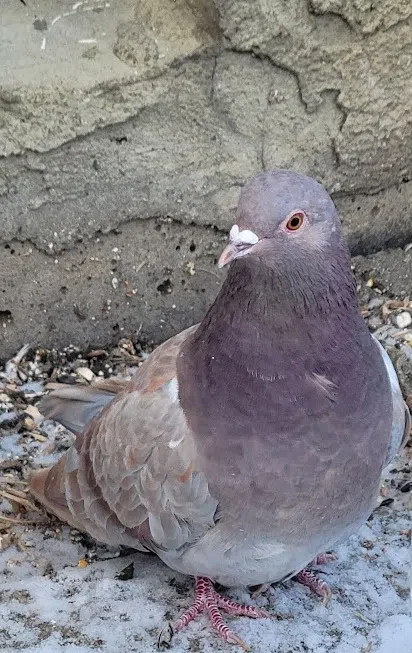
Pigeon in Fort McMurray AB. Photo by Jon Tupper
FORT MCMURRAY — A growing population of feral pigeons has taken over parts of Fort McMurray, prompting concern from residents and experts who say the city’s urban bird numbers have soared since the 2016 wildfire evacuation.
Many locals believe the problem began during that chaotic spring, when someone reportedly released pet pigeons during the city-wide evacuation. Those birds are thought to have survived, bred, and helped establish the large urban flocks now found throughout Fort McMurray. But experts caution that the true origin of Fort McMurray’s pigeon boom may never be fully known.
“Pigeons are what we call urban exploiters,” said Dr. Colleen Cassady St. Clair, a University of Alberta biologist who studies human-wildlife conflict. “Once introduced to a city, they reproduce rapidly because food and shelter are easy to find.” She said pigeons thrive in built environments by nesting on ledges that mimic natural cliffs and scavenging from garbage or spilled grains from bird feeders. Unlike most wild birds, they can breed multiple times a year, keeping populations high even through harsh northern winters.
The birds pose limited competition to native species, but dense flocks can create sanitation problems. Their droppings may spread diseases such as psittacosis, while accumulated waste can damage infrastructure.
Their impact isn’t entirely negative. Other Alberta cities have seen an increase in urban hawks and falcons feeding on the plentiful, pudgy pigeons, but Fort McMurray has not yet experienced that trend. Still, the surrounding boreal forest provides plenty of potential predators, including eagles, raptors, and foxes, that could play a role in natural control.
Communities across Canada have experimented with ways to manage pigeon populations. Deterrents like spikes, netting, or reflective tape can discourage nesting, but often lose effectiveness as the clever birds adapt. Falconry programs and deterrent kites that mimic predators can work temporarily. Fertility control, using contraceptives such as OvoControl, is considered a humane long-term option and is now approved in Canada for limited use on rooftops and industrial sites. The bait, however, can also affect other bird species if they consume it, potentially reducing reproduction among native birds and raising environmental concerns.
Cassady St. Clair said the simplest and most effective measure is public education. Residents and businesses can help by securing garbage, cleaning up spilled grain, and avoiding feeding pigeons intentional or otherwise. Even seed spilled from backyard feeders can sustain large flocks.
Experts say Fort McMurray’s pigeon problem is not unique, but it will likely prove persistent. With ample food, shelter, and few natural controls, the birds are here to stay. The challenge, said Cassady St. Clair, is not to eliminate them entirely, but to manage their numbers and minimize conflict, a task that will have to continue in the long term to be effective.


Comments