


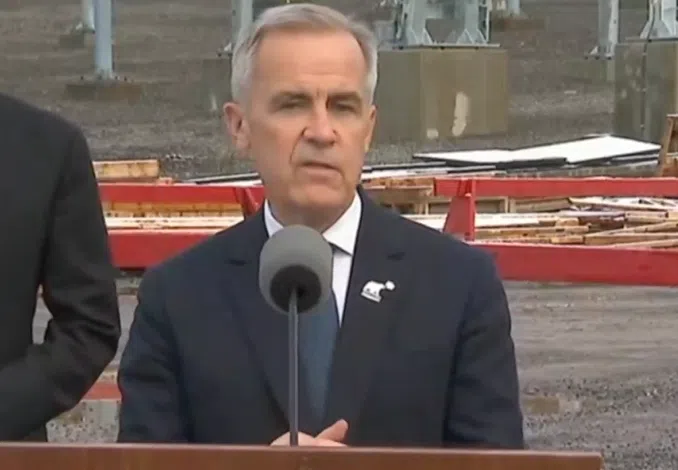
PM Mark Carney speaks in Terrace BC
TERRACE, B.C. — Prime Minister Mark Carney has unveiled the latest wave of nation-building projects under Budget 2025, but the package excludes any new pipelines or oil and gas developments in Alberta, despite repeated federal claims that Canada must grow as an energy superpower.
For the second time since the Major Projects Office was created in August, Alberta’s oil and gas sector did not receive a single project referral. Ottawa’s new list focuses instead on clean electricity transmission, LNG expansion on the West Coast, critical mineral development in central and eastern Canada, and northern hydro infrastructure.
Premier Danielle Smith said Alberta is supportive of all the projects included on the second list of nation-building projects. She also noted that the province is still pressing Ottawa for specific commitments tied to Alberta’s energy sector. She said Alberta is working with the federal government on an agreement that would remove, carve out or overhaul several federal laws she argues have discouraged private investment in the province’s energy sector. She added that Alberta is in the final stages of negotiations that include a path toward ultimate approval of a bitumen pipeline to Asian markets.
NDP Leader Naheed Nenshi rejected Smith’s claim that a pipeline proposal is being sidelined, arguing there is no actual project for Ottawa to consider. He said the premier announced a concept with no private proponent, no investment and before speaking to anyone along the proposed route. He said the question now is whether she did that because she does not understand the process or because it gives her an opportunity to claim the prime minister is denying Alberta what it wants. Nenshi said other options exist that could increase export capacity almost immediately, including an Enbridge plan to expand its mainline and the potential for the TransMountain expansion to increase throughput by about 30 percent. He questioned why the premier is pushing a pipeline that no company has formally put forward.
The absence of Alberta-based energy projects comes as the province continues to push for pipeline expansion and federal backing for oil and gas infrastructure. Ottawa maintains that the new projects will still benefit Alberta indirectly through increased LNG capacity, mining supply chains and national transmission planning. Smith said Alberta expects clarity soon, adding the province will know in the coming days whether the federal government intends to support Alberta’s economic future or continue what she called the failed policies of the past ten years that she argues have cost Canadians hundreds of billions of dollars in lost investment and hundreds of thousands of jobs.
The largest project endorsed in this tranche is the North Coast Transmission Line in northwest British Columbia, which Ottawa calls a foundation for a cleaner and more competitive national economy. The project will twin major transmission routes, expand telecommunications and connect resource regions along the West Coast. The federal government says it could eventually cut emissions by up to three million tonnes a year and anchor a long-term clean-energy industrial corridor.
That corridor is designed to support the Ksi Lisims LNG project, also included in the new approvals. Led by the Nisga’a Nation, the facility would become Canada’s second-largest LNG plant and, once electrified, among the lowest-emission LNG operations in the world. Ottawa says nearly 30 billion dollars in investment and thousands of skilled jobs are tied to the facility, along with new natural gas transmission to supply it.
Three critical mineral projects were also added to the Major Projects Office priority list. A nickel development near Timmins is positioned as a flagship project for low-carbon metals used in batteries and green steel. A graphite mine in Quebec is expected to supply defence and battery supply chains, while a tungsten development in New Brunswick aims to reduce reliance on foreign suppliers of strategic materials.
In the North, the federal government referred the Iqaluit Nukkiksautiit hydro project to the Major Projects Office. Ottawa says the project would eliminate the city’s reliance on diesel, provide fully Inuit-owned clean power for the first time and strengthen sovereignty in the Arctic.
Together, the first and second tranches represent more than 116 billion dollars in proposed investment across the country. Federal ministers say the strategy is intended to diversify trade, expand transmission infrastructure, accelerate clean-energy production and strengthen Canada’s position in critical minerals. Smith said Alberta will soon learn whether the federal government intends to work with the province on a new framework for energy development or continue policies she argues have held back the Alberta and national economies.


Comments