


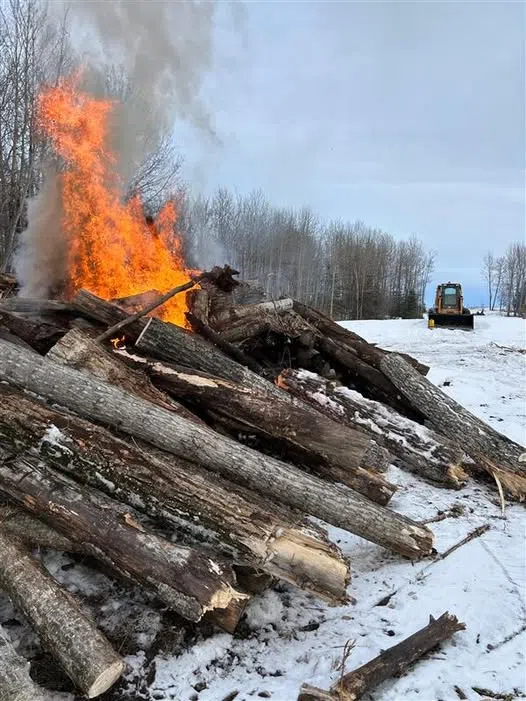
Winter burning, image via Alberta Wildfire Facebook
EDMONTON — Alberta’s official fire season may be over, but Alberta Wildfire is asking people to wait until there is at least 15 centimetres of snow on the ground before starting any winter burns.
The agency says a surprising number of wildfires ignite during the colder months. Little or no snow cover can leave dry brown grass exposed and ready to burn, and sparks from campfires, burn barrels or agricultural burns can spread quickly under the right conditions.
Officials warn that winter burning can also create dangerous driving conditions. Smoke tends to lie low to the ground on cold days and can drift long distances, reducing visibility on highways and rural roads. Alberta Wildfire says the safest days for burning are those with average temperatures and light winds.
People planning a winter burn are urged to check weather forecasts for snow and wind conditions, avoid burning during an inversion, and consult municipalities or local authorities when larger projects are planned near communities or roads. The agency advises managing burn projects closely to limit total burn time, reduce smoke and allow crews to adjust as conditions change. It also recommends burning debris in stages and ensuring more than 15 centimetres of snow is in the area.
Winter is often used to burn brush piles and windrows because deep snow limits the chance of a fire escaping. Alberta Wildfire says people should still keep tools and water nearby, especially when drought conditions are high, since fires can dig in and burn underground.
The agency suggests inserting a metal rod into the burn area to check if material is still smouldering. A warm or hot rod means the fire is still active below the surface. Crews are urged to extinguish burns by soaking, stirring and soaking again. In some cases heavy machinery may be needed to break up piles or dig down so water can reach the fire.


Comments