


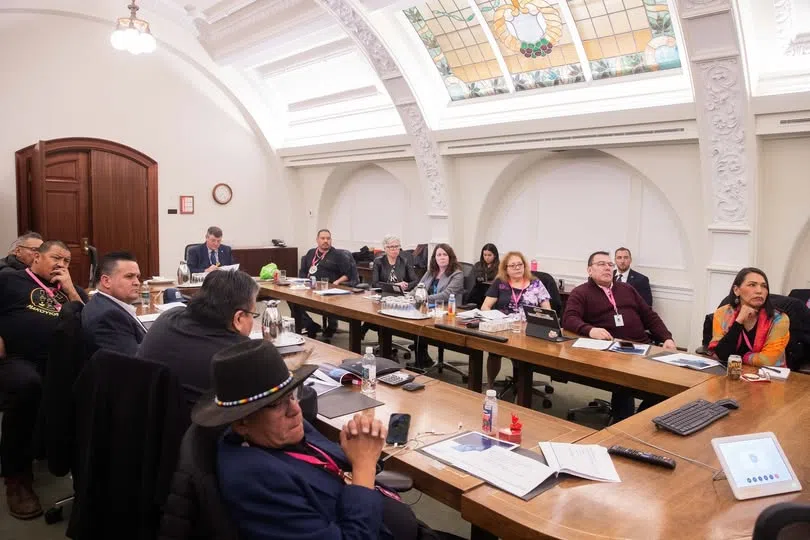
Government of Alberta Addiction Wisdom Council
EDMONTON — Alberta has created a Mental Health and Addiction Wisdom Council that will provide Indigenous guidance and cultural insight as the province expands its recovery-oriented approach to addiction and mental health care.
The council began its work during meetings on Dec. 3 and 4 and will operate for one year. The group is expected to advise the government on the design, implementation and evaluation of major policy initiatives, including compassionate intervention, mental health strategies and addiction treatment. Members will also recommend solutions rooted in community experience and traditional knowledge.
Mental Health and Addiction Minister Rick Wilson said the work represents a meaningful step toward ensuring Indigenous voices are heard in shaping recovery programs. Indigenous Relations Minister Rajan Sawhney said the council recognizes that Indigenous communities face distinct challenges and must guide culturally grounded approaches.
Indigenous people make up less than seven per cent of Alberta’s population but account for about 20 per cent of opioid deaths. The government says partnerships with Indigenous communities are essential for improving access to culturally appropriate supports.
The council includes Elders, Chiefs, community leaders and government officials representing multiple Nations and organizations. Members include chair Candace Black of the Chard Métis Nation, Fort McKay Chief Raymond Powder, leaders from Bigstone Cree Nation, Siksika Nation, Tsuut’ina Nation, Horse Lake First Nation, Montana First Nation, Saddle Lake Cree Nation and others.
Black said the group brings knowledge passed down from Elders and ancestors and hopes to support healing and connection through its work.
The province says the Alberta Recovery Model is expanding access to supports in Indigenous communities, including $180 million for recovery communities in partnership with Enoch Cree Nation, Tsuut’ina Nation, Siksika Nation, the Blood Tribe and the Métis Nation of Alberta. Another $7 million is allocated in 2025-26 for culturally safe, community-based mental health and addiction programming.
The council will deliver a report with recommendations to the minister by March 2027.
People seeking mental health or addiction support can call or text 211 Alberta for local services. Those dealing with opioid addiction can contact the Virtual Opioid Dependency Program at 1-844-383-7688 for same-day access to specialists, while those seeking help for non-opioid or behavioural addictions can call the Virtual Rapid Access Addiction Medicine program at the same number.


Comments