


aa-w / Depositphotos.com
EDMONTON — The idea of small modular reactors in northern Alberta is moving from theory to public discussion as the province weighs whether nuclear energy should play a role in its future power mix.
Alberta’s Nuclear Energy Engagement and Advisory Panel began formal public consultations on Dec. 8 and Dec. 10, 2025, launching the first phase of engagement on the potential deployment of small modular reactors, or SMRs. The discussions come as electricity demand rises alongside industrial growth and expanding data infrastructure.
Advocates say the smaller, modular design of SMRs could shorten construction timelines and reduce financial risk compared with traditional large scale nuclear plants.
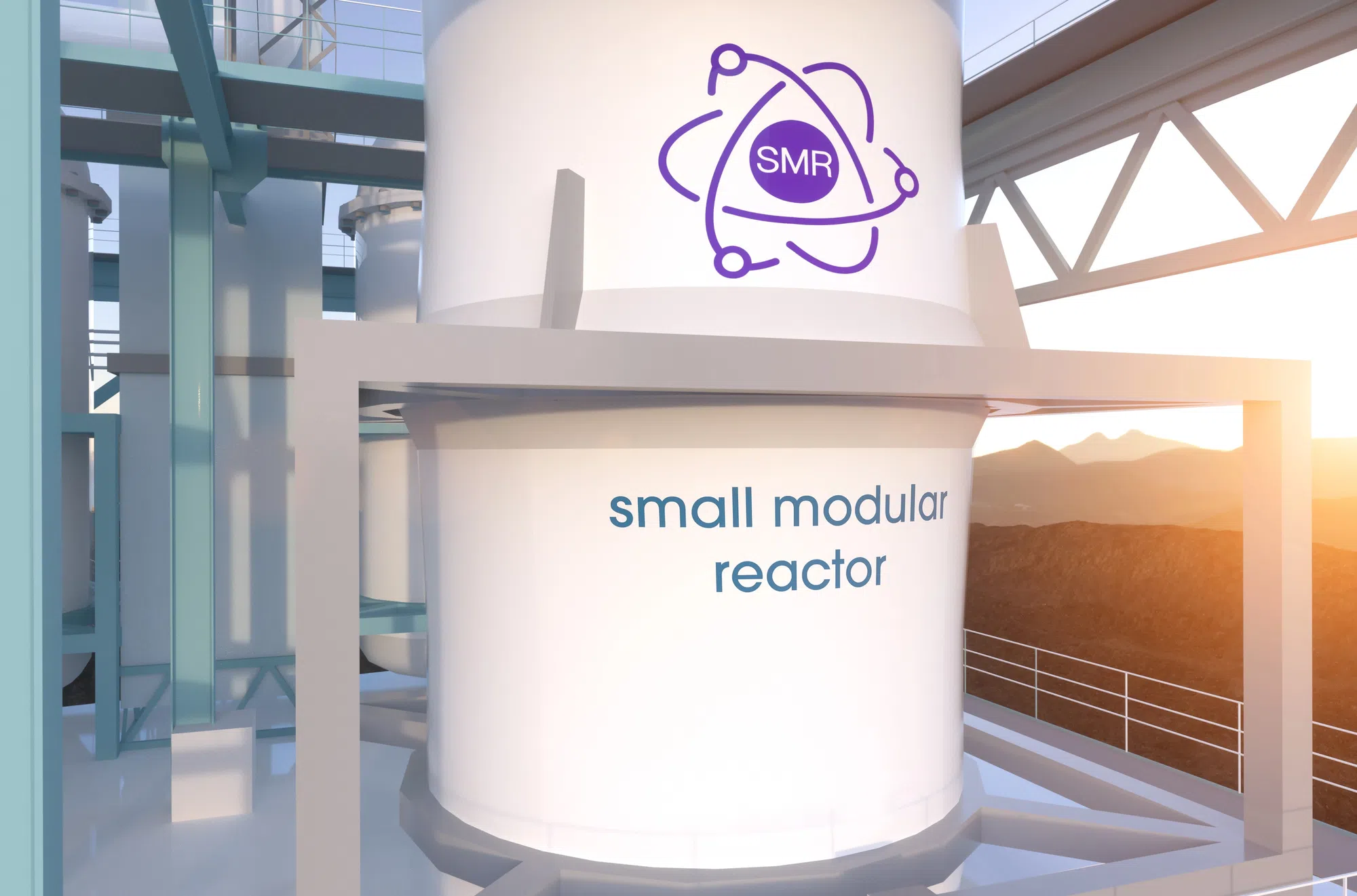
SMRs are designed to generate about 300 megawatts of electricity per unit, enough to power hundreds of thousands of homes. Their compact footprint and ability to operate around the clock have drawn attention from policymakers searching for reliable, low emissions baseload power. Micro reactor concepts have also been floated for remote or industrial sites, though they would not supply Alberta’s main grid.
Safety and waste management remain central to the debate. Canada’s nuclear sector operates under oversight from the Canadian Nuclear Safety Commission, with additional international monitoring. Proponents argue modern reactor designs incorporate passive safety systems and decades of operating experience, while critics continue to raise questions about long term waste storage and costs.
If Alberta were to proceed with nuclear development, it would rely on a fuel supply chain rooted largely in neighbouring Saskatchewan.
In the Athabasca Basin of northern Saskatchewan, uranium exploration activity is accelerating as global interest in nuclear power resurges. Several junior companies have launched winter drilling programs, targeting structural corridors and geophysical anomalies believed to host high grade deposits. Their work unfolds as regulators review the proposed Rook I Project, which, if approved, could produce up to 14 million kilograms of uranium annually and further entrench Canada’s position as a leading supplier.
Saskatchewan has long been central to global uranium production, home to some of the world’s highest grade deposits. From the early discoveries at Rabbit Lake and Key Lake to the massive McArthur River and Cigar Lake operations, the province has supplied reactors worldwide for decades. Although output has fluctuated with market cycles, renewed exploration suggests companies are positioning for sustained demand.
Rising electricity needs tied to decarbonization goals and the expansion of artificial intelligence and data centres have renewed attention on nuclear energy as a steady source of power. Small modular reactors represent one possible bridge between provincial energy ambitions and the mineral wealth of the Prairies.
As Alberta studies its options and drill rigs turn across northern Saskatchewan, an energy partnership of sorts is taking shape, linking potential reactor sites to established uranium districts.
Nuclear power, once nearly taboo, is coming forward once more as a viable form of emissions free energy.


Comments