


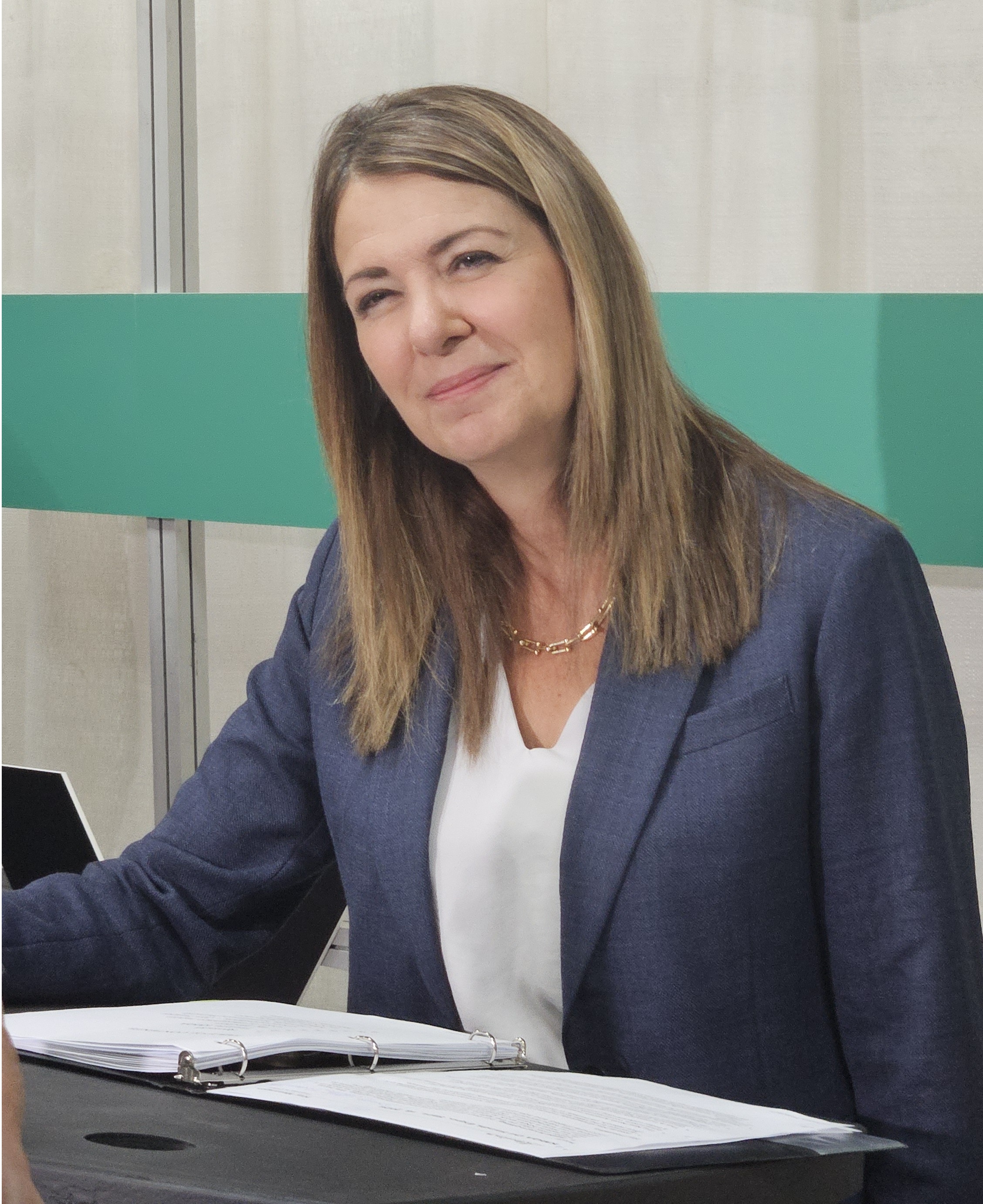
Premier Smith at Oil Sands Expo, 2026
CALGARY — Alberta Premier Danielle Smith says pipelines have become a national priority as governments and industry look for ways to expand Canada’s energy infrastructure and improve access to new markets.
Smith made the comments while attending the International Pipeline Conference & Expo in Calgary, where engineers, operators, regulators and technology companies are gathering to discuss the future of pipeline development.
“Pipelines have gone from impossible to a national priority, and every one of those projects earns public trust the same way — by being built and operated properly,” Smith said.
Her comments come as Ottawa moves to overhaul the federal approval process for major projects.
The federal government tabled Bill C-39, the Building Canada Strong Act, earlier this week. The legislation is intended to accelerate federal reviews and decisions for major projects considered important to Canada’s economic and strategic interests.
Federal Energy Minister Tim Hodgson told Harvard Media News the government intends to apply lessons from its Major Projects Office more broadly across the federal approval system.
Under the proposed approach, Ottawa is promising “one project, one review, one decision within one year.”
The changes could have significant implications for pipeline development and oilsands mining projects requiring federal approval.
Ottawa and Alberta are already working together on a proposed new West Coast oil pipeline under a Canada-Alberta memorandum of understanding.
Hodgson says the two governments are working toward an Oct. 1 decision on whether to formally list the proposed pipeline for an accelerated federal process.
If it is listed, Ottawa and Alberta are targeting a decision or conditions document by September 2027.
The renewed focus on pipeline development comes as industry representatives from around the world meet in Calgary for the International Pipeline Conference & Expo.
The five-day event focuses on pipeline infrastructure, safety, digitalization and energy transition, bringing together operators, engineers, regulators, contractors and technology providers.
Conference discussions include pipeline integrity, hydrogen and carbon dioxide transportation, regulatory trends and emerging technologies.
More than 300 exhibitors are also showcasing pipeline materials, monitoring systems, robotics and artificial intelligence-driven technologies.
The conference is held every two years and is intended to connect international pipeline expertise with North American infrastructure development and innovation.


Comments