


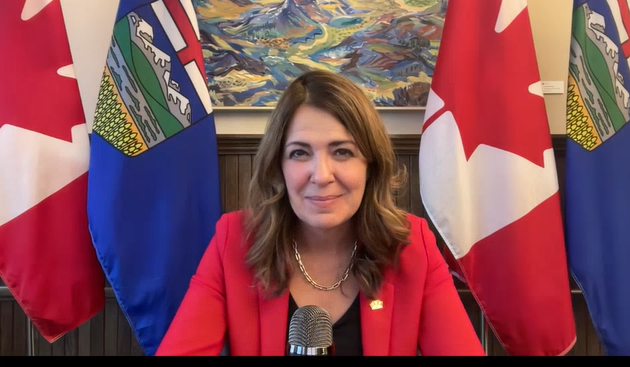
Premier Smith Exclusive interview with Harvard Media, October 15, 2026
FORT MCMURRAY — Alberta Premier Danielle Smith says she expects the proposed Pacific Link Pipeline to complete its approval process and be ready for construction by the fall of 2027, saying she has reason to trust Prime Minister Mark Carney and the federal process now underway.
In an exclusive interview with Harvard Media News, Smith said Carney’s target of having the process completed and shovels in the ground by September 2027 is realistic.
“Very much so,” she said.
Smith said Alberta and Ottawa have been working through the details of the project since signing a memorandum of understanding last November, with one of the first priorities being a proposal for a new West Coast pipeline.
The province initially considered a route toward Prince Rupert, but Smith said Carney persuaded Alberta to instead follow the existing Trans Mountain corridor.
“We initially thought that the best pathway would be to the upper West Coast, Port of Prince Rupert or that area,” Smith said. “But as it turns out, the Prime Minister persuaded us that using the existing right-of-way with Trans Mountain, because it had more recent environmental permits, more recent First Nations consultation, that we might be able to shave two to three years off of the proposal.”
Smith said Alberta agreed with that approach.
The proposed pipeline would carry about one million barrels of oil per day to the West Coast. Smith said Trans Mountain is expected to play the principal role in building it, with Pembina Pipeline brought in as a private-sector partner.
She said the project’s designation Oct. 1 as a project of national interest under the federal Major Projects Office was an important first step toward meeting the accelerated timeline.
“To have the Prime Minister say he intends to have that process finished so we could start with shovels in the ground in September 2027, that’s music to my ears, that’s what he tells me,” Smith said.
“And so I think that we have every reason to believe everyone is working towards that timeframe and taking all of the steps that we need to, to try to accelerate and restore business confidence.”
Smith said the relationship between Alberta and Ottawa has changed significantly under Carney, particularly on energy development.
She pointed to geopolitical instability, concerns over global energy security and changing trade relationships as factors that have shifted attitudes toward Canadian oil and gas.
“I think it’s a very different approach that this current iteration of the federal Liberals is taking than the one that was there before,” she said.
Smith said the federal government’s experience with the Trans Mountain expansion has also helped demonstrate the value of pipeline infrastructure.
She said the Pacific Link project could become an important test of whether Canada can once again complete major infrastructure projects on accelerated timelines.
“I think that’s a good model for us to have in this moment in time that we have, where we have to demonstrate to the business community that major projects of national interest like this can be built,” Smith said.
The premier said she believes Canada has an opportunity to significantly expand its role as a reliable global energy supplier, with several pipeline projects and expansions now being discussed.
“There is a very realistic pathway for us to increase our barrels by three million barrels more per day by 2035,” Smith said.
“And I think that is a demonstration that when in this world of uncertainty, where everyone is looking for a reliable supplier, the name on everyone’s lips is Canada. And we finally have Canada and Alberta working together to make that happen.”
Smith said the improving relationship with Ottawa has made her more optimistic that remaining regulatory and policy disagreements can be resolved.
“I have been pleasantly surprised, and I hope most people have been pleasantly surprised, that the reversals that we’ve seen from Ottawa, I think they got the message,” she said.
“We actually have to find a way to work together. And that’s going to be good for us. It’s going to be good for Canada. It’s going to be good for national unity.”


Comments