


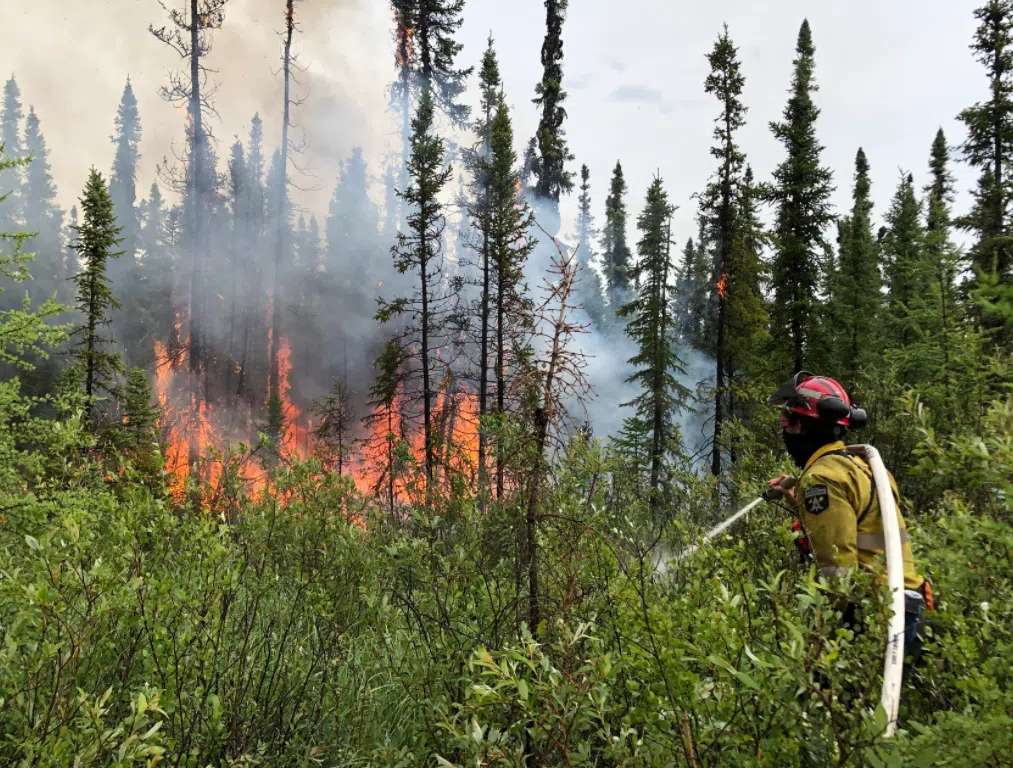
EDMONTON — Alberta is marking the end of a relatively quiet wildfire season, with fewer fires and substantially less land burned than the five-year average.
According to the provincial government, Alberta Wildfire responded to 785 wildfires that burned just under 18,000 hectares since Jan. 1. That compares with a five-year average of 996 wildfires burning more than 660,000 hectares.
Significant rainfall across much of the province helped reduce wildfire activity, while firefighting crews and early intervention efforts helped prevent fires from becoming larger threats to communities.
For a brief period in mid-August, Alberta recorded no active wildfires, marking the first time in 40 years the province had reached that milestone at that time of year.
“This was a different kind of season than we’ve seen in recent years and we’re grateful for that. But wildfire doesn’t keep a calendar. While the rainfall helped, we are very proud of the work our wildfire teams have done on initial attack, working to get fires under control before they become a threat to communities,” said Forestry and Parks Minister Todd Loewen.
Alberta’s legislated wildfire season runs from March 1 to Oct. 31, although the province says wildfire preparedness and mitigation efforts continue throughout the year.
The government says it is already preparing for future wildfire seasons through investments in firefighting equipment, community protection programs and its Alberta Wildfire Mitigation Strategy.
The strategy, launched six months ago, focuses on reducing wildfire risks through partnerships, public preparedness, vegetation management and improvements to emergency response capabilities.
Since April 1, 2025, nearly 1,000 hectares of strategic fuel breaks have been constructed by managing vegetation and clearing forested areas to help slow the spread of wildfires and reduce their intensity near developed areas.
Another 6,200 hectares have been treated near 24 communities considered at risk through the Community Hazardous Fuels Reduction Program.
The Forest Resource Improvement Association of Alberta (FRIAA) has committed more than $7 million to 61 community FireSmart projects across the province.
Those projects include community preparedness plans, public education initiatives and fuel management work designed to reduce the potential impact of wildfires.
Since April 1, FRIAA’s Community Fireguard Program has also committed more than $10 million to five projects at Castle Mountain, the Kananaskis Improvement District’s Lower Cottage Subdivision, Canmore’s southern boundary, Bigstone Cree Nation and Driftpile Cree Nation.
Work on those projects is expected to begin this fall and continue into 2027.
The provincial government says 31 wildfire mitigation projects have also been completed across Alberta’s eight recognized Metis Settlements through the federal-provincial Resilient Communities through FireSmart program.
Since 2013, funding has supported 772 FireSmart projects benefiting 180 Alberta communities.
Alberta Parks also completed more than 125 hectares of hazardous-fuel treatments in nine provincial parks during the 2025-26 fiscal year, the first year of its formal provincewide wildfire mitigation program.
The province says more than 1,600 Advanced FireSmart Home Assessments have been completed since spring, helping homeowners identify ways to reduce wildfire risks around their properties.
Communities are also using a new FireSmart Alberta Community Scorecard to assess their preparedness, identify priorities and track improvements.
“The safety of our communities and the protection of our forests are the heart of what we do. Wildfires can happen at any time, so we stay trained, prepared and ready to respond. We’re proud to work with Alberta Wildfire and to support the residents of the Lac la Biche area whenever we’re needed,” said Kelly Shirt, a Goodfish Lake Firetack crew contractor in the Lac la Biche Forest Area.
The province also expanded its firefighting capabilities during 2026, adding two hoist-equipped helicopters and a five-person crew to improve access to remote wildfires.
Training capacity was also expanded in Hinton.
A new Mutual Aid Incentive Pilot was introduced to encourage municipalities to request firefighting assistance earlier by offering up to $125,000 to help cover eligible costs.
Despite the quieter season at home, Alberta continued supporting wildfire operations elsewhere.
More than 1,000 Alberta personnel were deployed to assist wildfire agencies in Australia, Ontario, Quebec, the Northwest Territories, British Columbia and the United States.
The province says its focus now turns to maintaining firefighting readiness and expanding wildfire mitigation efforts to protect communities, infrastructure and natural resources ahead of the 2027 season.


Comments