


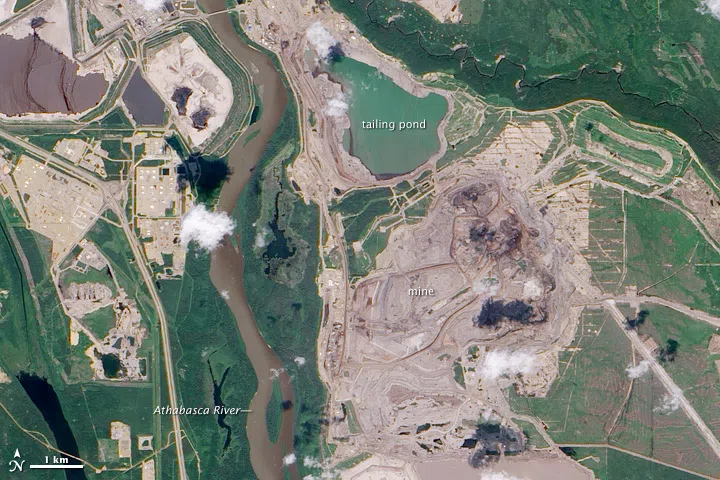
By NASA Earth Observatory - http://earthobservatory.nasa.gov/IOTD/view.php?id=40997, Public Domain
FORT MCMURRAY — A coalition of Indigenous leaders and advocates is calling for a comprehensive assessment of oilsands tailings risks, warning of long-term impacts on water, ecosystems and human health in northern Alberta.
The statement, issued March 26 by the group Keepers of the Water following a conference in Treaty 8 territory, reflects the position of that organization and its supporters, not a consensus across industry or governments.
The group says decades of oilsands development have led to cumulative effects on rivers, lakes and communities, citing concerns about toxic tailings, air emissions and potential links to declining ecosystem health and elevated cancer rates.
It is urging federal and provincial governments to adopt what it describes as a precautionary approach, including a basin-wide risk assessment of contamination pathways in the Mackenzie River system, with a focus on the Athabasca River and Peace-Athabasca Delta.
The statement also calls for a halt to the expansion of tailings sites, increased collaboration with affected communities on remediation and stronger requirements to restore disturbed land to conditions that meet or exceed Indigenous standards tied to constitutionally protected rights.
Industry groups, however, say tailings management is a necessary part of reclamation.
The Mining Association of Canada says water in tailings ponds must be treated and managed before it can be safely returned to the environment, and that doing so is a key step in reclaiming mined land and restoring it to a natural state.
Oilsands operators are required under provincial regulations to submit and implement reclamation plans, though timelines and methods for dealing with tailings remain a subject of ongoing debate.
The federal and Alberta governments have not yet publicly responded to the latest call for a comprehensive risk assessment.


Comments