


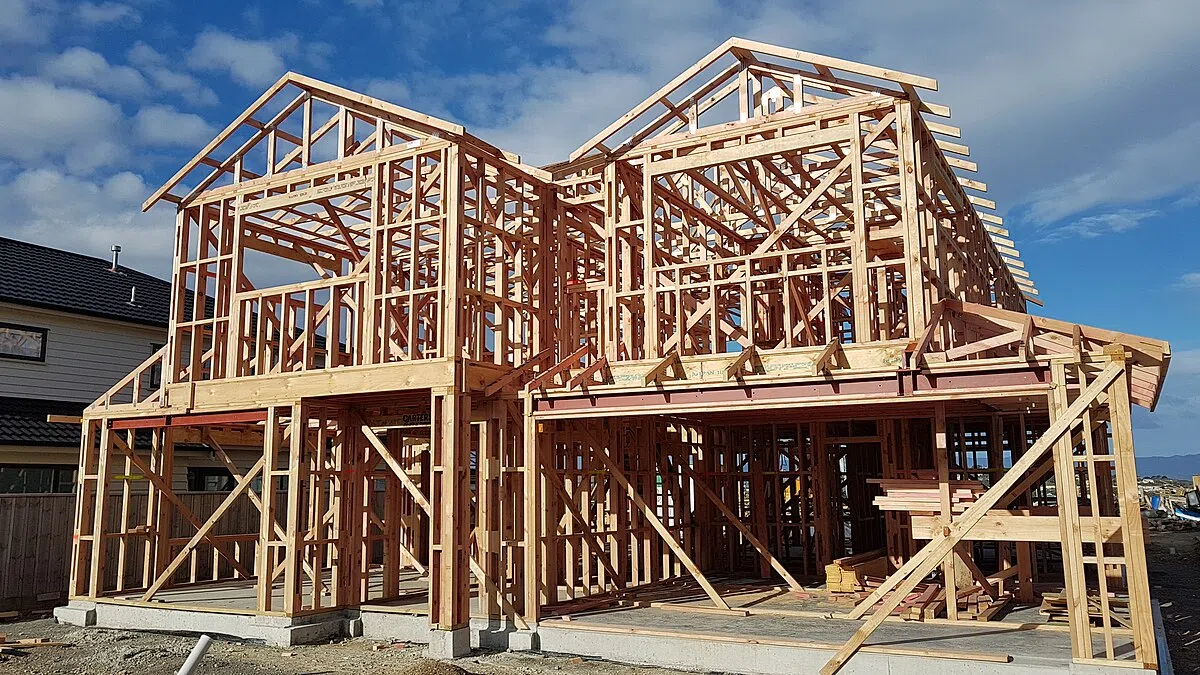
Timber frame house under construction. Wikimedia Commons. CC License. Photo by L Maule
EDMONTON — A more co-operative tone between Alberta and Ottawa is emerging as the two governments continue to work together on major infrastructure priorities, from oil and gas development to carbon capture.
On Wednesday, that relationship expanded to include housing, with Prime Minister Mark Carney and Alberta Premier Danielle Smith announcing an infrastructure agreement aimed at helping communities build more homes.
The partnership will give Alberta municipalities access to more than $510 million in federal funding over eight years through the Canada Housing Infrastructure Fund.
Alberta will contribute at least one-third of eligible costs for projects led by municipal governments, potentially adding up to $428 million in provincial funding.
The money will support drinking water, wastewater, stormwater and solid-waste infrastructure needed to accommodate new housing.
“Strong communities start with the infrastructure to support them,” Smith said.
“By investing in the water and wastewater systems communities rely on, we’re doing what it takes to build more housing, attract new investment and keep pace with Alberta’s growth.”
The agreement comes as rapid population growth places additional pressure on housing and public infrastructure across Alberta. The province says its population has grown by more than 600,000 people over the past five years.
Alberta has set a goal of supporting the construction of 25,000 additional affordable homes by 2031.
Carney characterized the latest agreement as part of a broader partnership between the two governments, describing their approach as “cooperative federalism.”
“Alberta has an ambitious plan to scale up homebuilding and our government is backing it,” Carney said.
“We’re partners in this mission, working in the true spirit of cooperative federalism. From transformative energy projects to the water infrastructure in your communities, we are building bigger, faster, and better because we’re building together.”
While the agreement brings federal and provincial money together, Alberta will maintain the lead role in identifying and prioritizing projects before submitting them to Ottawa.
Transportation and Economic Corridors Minister Devin Dreeshen said the province worked to ensure the agreement aligns with existing Alberta infrastructure programs while maintaining provincial oversight.
“With provincial oversight of project selection, we will be able select projects that will meet regional needs and support growing Alberta communities,” Dreeshen said.
Twenty per cent of the federal funding, or at least $100 million, will be directed toward projects in rural or Indigenous communities.
The funding is intended to address infrastructure constraints that can prevent or delay new housing. Communities need sufficient water, sewer, stormwater and waste capacity to support new neighbourhoods, while existing systems in some municipalities are aging or reaching capacity.
Scott Fash, chief executive officer of BILD Alberta Association, said collaboration between governments and industry will help address those barriers.
“When industry and governments align, Alberta moves fast,” Fash said.
Alberta’s Transportation and Economic Corridors ministry is developing the first group of projects for submission to the federal government by Nov. 30. Remaining projects are to be submitted by March 2030.
The federal government says Canada Housing Infrastructure Fund agreements represent a combined $3.65 billion investment in local infrastructure across the country, with the program expected to support an average of 750 jobs in Alberta over 10 years.


Comments