


FORT MCMURRAY — The ongoing trade dispute between Canada and the United States is raising questions about potential impacts closer to home, including costs for local institutions and municipal operations.
Keyano College says it does not anticipate any near-term impacts to its operations or student costs.
“At this stage, we do not anticipate any immediate impacts to our operations or student costs,” said Dr. Mark Dolmont, vice-president academic at Keyano College.
“Key imports, including our bookstore inventory, paper supplies, and course materials, were secured early in the summer. This means we are fully stocked through this academic year and into next summer.”
Dolmont said Keyano will continue monitoring costs and adapt as needed to safeguard students and ensure operational stability.
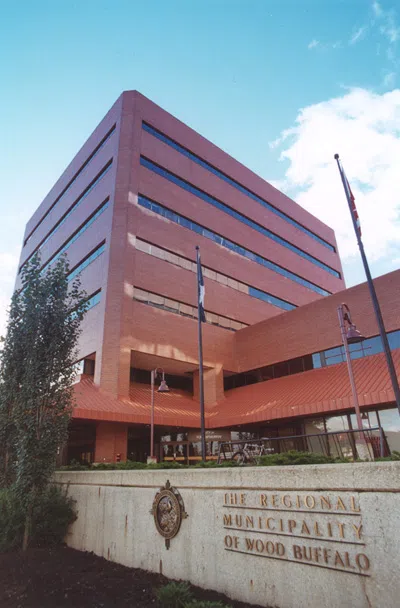
Meanwhile, Harvard Media reached out to the Regional Municipality of Wood Buffalo to ask what municipal services may be affected by tariffs. The municipality referred the inquiry to Alberta Municipalities.
Alberta Municipalities represents more than 260 municipalities across the province, including cities, towns, villages, summer villages and specialized municipalities, representing more than 85 per cent of Albertans.
Alberta Municipalities president Dylan Bressey says the potential cost of everything from infrastructure materials to heavy equipment needs greater attention as governments respond to the trade dispute.
“We don’t think that other orders of government recognize yet the impact that tariffs are going to have on municipal operations,” Bressey said during a recent Cross Border Interviews podcast.
“When it comes to buying steel for bridges or replacing a grader, all of sudden there’s a huge cost increase that municipalities are going to face.”
Bressey said municipalities could be left with difficult choices as those costs increase.
“That means municipalities are either going to have to reduce services that businesses which are already struggling rely on, or increase property taxes,” he said.
Bressey said municipal impacts should be near the top of the agenda as governments consider how to support Canadians through tariffs and the trade dispute.
He also said many of the new impacts will be felt by small businesses, which he described as more geographically dispersed and less able to pivot than the large industries affected in the past.
“Essentially, the new impacts are going to hurt local communities,” Bressey said.
“We suggest that municipalities need to be strong partners in making sure that local residents and businesses are well supported through these challenging times.”


Comments