


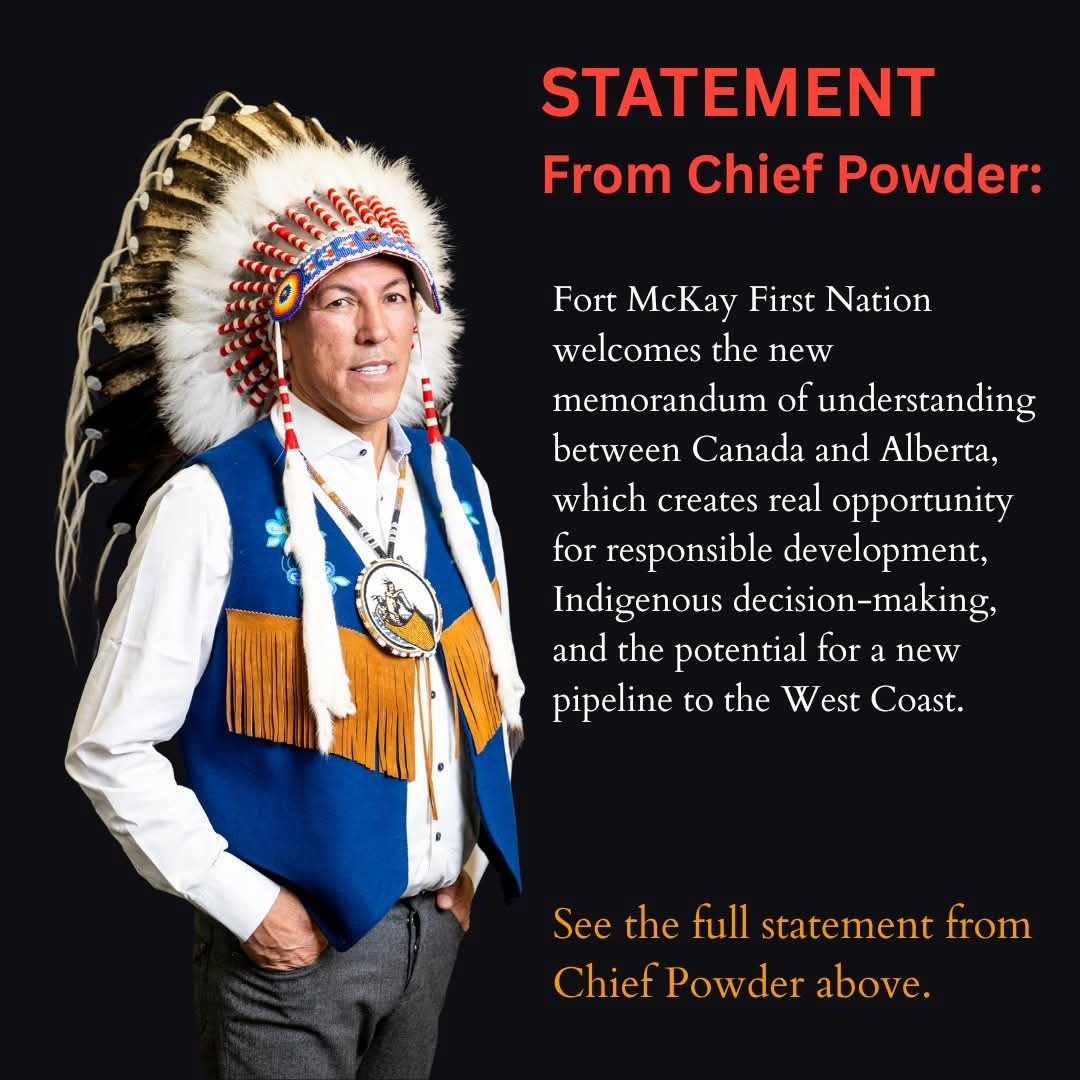
FORT MCKAY — The chief of Fort McKay First Nation took to social media on the National Day for Truth and Reconciliation to share his thoughts on Indigenous self-determination, reconciliation and the role First Nations should play in shaping Canada’s economic future.
In an open letter published Sept. 30, Chief Raymond Powder pointed to threats and insults from the United States, including protectionist tariffs and rhetoric about Canada becoming a “51st state,” as a reminder of why sovereignty matters so deeply to First Nations.
Powder said Indigenous communities understand those threats in a deeply personal way because of the history of colonization and the loss of control over their lands, families and futures.
He said those experiences continue to shape First Nations’ determination to uphold Treaty rights, preserve traditional ways of life and maintain their role as stewards of their territories.
At the same time, he said there are reasons for optimism.
Powder pointed to Fort McKay First Nation’s participation in the resource sector as an example of how economic development and environmental stewardship can coexist.
He cited the Nation’s 174C development project, which he described as the only Indigenous-owned and Indigenous-led oilsands development in Canada, along with efforts to protect areas such as Moose Lake.
Powder said Fort McKay has spent decades pursuing what he called a pragmatic approach that creates jobs and economic opportunity while protecting cultural and environmental priorities.
He also pointed to federal and Alberta Indigenous loan-guarantee programs as examples of policies helping more First Nations secure ownership stakes and a greater role in major projects.
Powder said that progress should guide the next phase of resource development in Canada.
He said Prime Minister Mark Carney’s efforts to accelerate major projects, including pipelines, and attract new investment could create opportunities, but warned the details will determine whether Indigenous communities are treated as meaningful participants.
Powder called on governments and industry to actively involve traditional knowledge keepers and Indigenous land stewards in resource development.
He said First Nations should be brought into projects not only as advisers or consultants, but as leaders, partners and equity shareholders.
Powder said Fort McKay’s experience shows that approach can benefit industry, governments and Indigenous workers.
He framed that participation as part of a broader reconciliation effort, arguing that Indigenous communities should share directly in the economic benefits of projects developed on or near their traditional territories.
Powder said Canada is at a crossroads as it seeks to expand resource development and strengthen its position in global energy markets.
He said that push should also be used as an opportunity to move beyond the legacy of colonialism and ensure First Nations have an equal stake in the country’s future prosperity.


Comments