


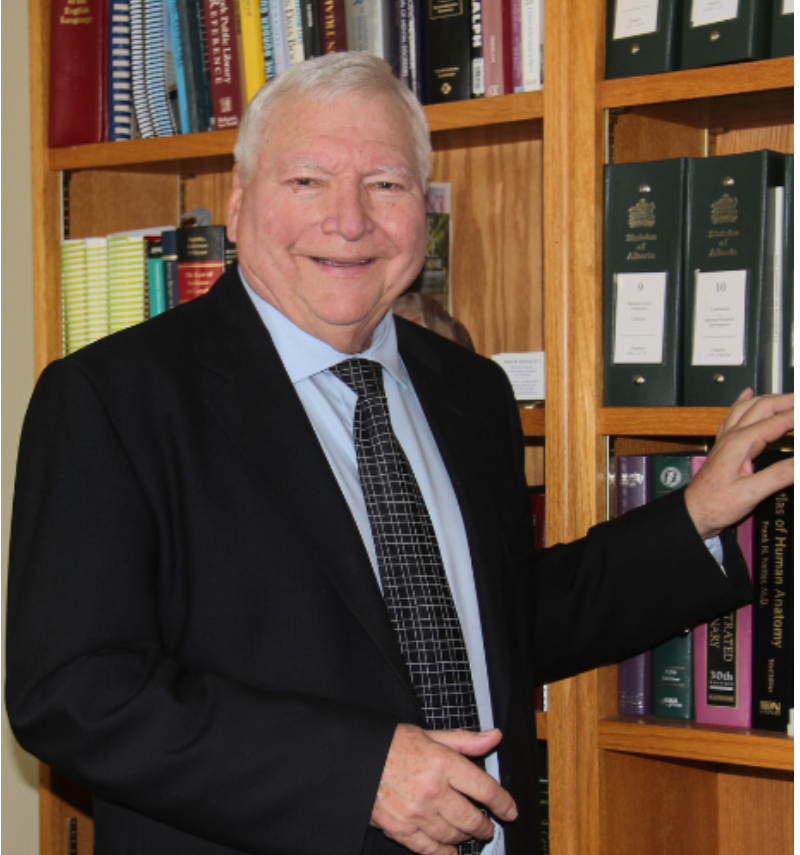
Retired Justice, Adam Germain (KC) image via: https://germainkc.ca/
FORT MCMURRAY — As Albertans prepare to vote in the Oct. 19 referendum, retired Justice Adam Germain says the increasingly heated debate is also a reminder of one of the central protections of Canadian democracy: people are free to argue for political change, including ideas others may strongly oppose.
That includes discussions between Alberta separatists and political figures outside Canada, Germain said, arguing such lobbying falls far short of the legal thresholds for treason or sedition.
“Neither of these sections, neither treason nor sedition, would apply to the type of lobbying that’s going on now,” Germain said. “And the folks who promote those theories are simply inflaming an already awkward situation.”
The comments come as debate over Alberta’s political future intensifies ahead of the referendum, including criticism surrounding reports that some separatist leaders have met with political figures in the United States.
Germain, a former member of the Alberta legislature who later served as a federally appointed Justice, said Canadians have broad latitude to discuss political and constitutional change, including ideas that may be unpopular or deeply controversial.
He said treason carries a particularly high legal threshold and generally involves assisting a country with which Canada is at war.
“I recognize people are distressed by it … but it is far below the level of treason or sedition,” Germain said.
He said sedition similarly does not capture peaceful political advocacy.
“And sedition is the threat of an overthrow of the government other than by peaceful or democratic means,” Germain said. “And there’s a specific exclusion in the criminal code for bad mouth of the government. People are entitled to bad mouth the government, criticize the government.”
Germain said that freedom is one of the foundations of democratic government and applies regardless of whether a political idea is popular.
“And that’s one of the hallmarks of a democracy,” he said. “So when people say, oh, this shouldn’t be happening or I don’t want this to happen, they got to really think about what they’re saying.”
Germain said the Charter of Rights and Freedoms protects people across the political spectrum rather than distinguishing between viewpoints on the left, right or centre.
He said the approaching vote is inevitably increasing the temperature of the debate.
“The vote is coming up and it’s sort of like the fuse on a firecracker getting closer and closer to the firecracker,” Germain said. “As the fuse burns down, then the rhetoric and the heat increases.”
Beyond the debate over Alberta’s place in Canada, Germain said some of the referendum questions raise broader constitutional issues that cannot be resolved simply by a provincial vote.
He said constitutional change remains possible, but Canada’s constitutional structure deliberately makes significant changes difficult to achieve.
“The problem or the blessing, depending on what side of any question you’re on, the problem or the blessing with our Canadian constitution is it takes such a significant majority to alter it,” Germain said.
He also said several questions leave considerable room for interpretation and could continue shaping political debate after the ballots are counted.
“Globally, the issue with all of those questions is that they open the doors to an additional debate because the questions are generally uncertain, open to interpretation and could be used in many ways,” Germain said.
Germain said one benefit of putting those questions before voters is that they force Albertans to consider issues ranging from constitutional powers to the Senate, immigration and the justice system.
“One positive aspect of the election, if you’re looking for positives, is that they’ll stimulate thought and talk for many years into the future,” he said.
Whatever position Albertans take on the questions, Germain said the most important response is to participate.
“Whatever you feel about the questions, get out and vote,” he said. “Vote honestly and get out and vote.”
Germain said democratic freedoms also carry a responsibility to take part in the process.
“Democracy and freedom is not free,” he said. “It takes a little bit of time for yourself to make the efforts.”


Comments